
 Venue
Venue
Hotel Royal Shelter, Vapi, Gujarat
Program Schedule
09:30 AM | Registration & Networking Tea |
10:00 AM | Welcome Address by Ms. Neha Malviya, Regional Manager – West India, Global Electronics Association |
10:15 AM | Guest of Honor Address |
10:30 AM | Presentation on Consumer Electronics by Ms. Anuradha Kolharkar, Certified IPC trainer |
01:00 PM | Q & A Session |
01:15 PM | Networking Lunch |
02:15 PM | Presentation on Electrostatic Discharge (ESD) by Ms. Anuradha Kolharkar, Certified IPC trainer |
03:45 PM | Q & A Session |
04:00 PM | Presentation on PCB Handling by Ms. Anuradha Kolharkar, Certified IPC trainer |
04:30 PM | Q & A Session |
04:45 PM | Presentation by Industry Expert |
05:00 PM | Networking High Tea |
Consumer Electronics
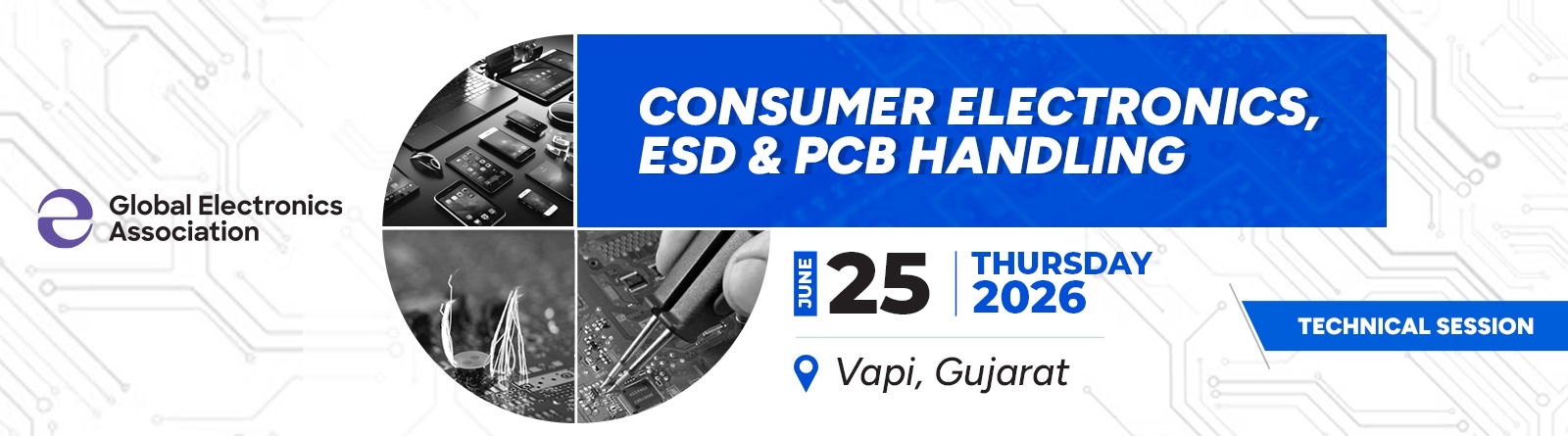
Consumer electronics encompass electronic products designed for daily personal and household use, such as smartphones, televisions, home appliances, wearables, and entertainment systems, where product reliability, miniaturization, and high-volume manufacturing demand stringent quality control. IPC standards provide globally recognized guidelines for electronics design, assembly, inspection, and testing, enabling manufacturers to achieve consistent quality, improved manufacturing efficiency, and enhanced product performance across the consumer electronics ecosystem.
Electrostatic Discharge (ESD)
Electrostatic discharge (ESD) is a common cause of damage to electronic components, especially sensitive ones like integrated circuits, transistors, and diodes. ESD occurs when a sudden flow of electricity between two objects with different electric potentials, such as a human body and a circuit board, creates a spark or shock. ESD can degrade, destroy, or alter the performance of electronic components, leading to failures, defect or reduced reliability. Therefore managing ESD risks and preventing damage to electronic components is a crucial aspect of electronics manufacturing , this session introduces participants to the causes of ESD and steps taken to mitigate its effects when handling, storage or transporting ESD-sensitive components in a manufacturing facility. You will learn basic principles and best practices for ESD control and protection.
PCB Handling
Printed Circuit Board (PCB) handling involves proper storage, transportation, inspection, and processing practices to prevent contamination, mechanical damage, and electrostatic discharge (ESD) during electronics manufacturing. IPC standards define globally accepted best practices for cleanliness management, operator handling procedures, and material protection, helping manufacturers safeguard PCBs, maintain assembly integrity, and ensure long-term reliability and performance of electronic products.
Who Can Participate?
This session is ideal for professionals involved in consumer electronics manufacturing and PCB handling processes, including electronics design engineers, production and process engineers, quality assurance and reliability professionals, EMS and OEM manufacturers, PCB assembly specialists, ESD coordinators, maintenance and testing engineers, manufacturing supervisors, and technical personnel responsible for electronics assembly, inspection, and handling operations.
Free Registration: Click Here
Note : A maximum of 5 candidates per member company & 3 candidates per non-member company are eligible to participate.