
The Electronics Talent Gap Starts with an Awareness Gap
Key Summary
- The industry has a visibility problem: Many engineering students are unfamiliar with electronics manufacturing careers.
- Hands-on experience drives interest: Projects and labs are the strongest influence.
- Students want clear career paths: They want to understand real roles and day-to-day work.
- Industry strengths match student priorities: Job security, advancement, and earning potential matter most.
Electronics manufacturing accounts for roughly one in five dollars of global trade — yet the industry faces a persistent talent shortage. A graying workforce means retirements are looming, and the electronics industry needs younger workers to fill both currently open roles and those that will open due to
retirements. Sixty percent of electronics companies are actively hiring, but can’t find the talent they need.
To understand the perspectives of students studying fields related to electronics, the Global Electronics Association surveyed a small group of undergraduate and graduate students, 98% of whom are studying electrical, mechanical, or another engineering discipline, reaching them through the Association’s student chapters.
The results show that the industry has a visibility problem even among the students who should have the most interest, despite offering exactly what they want.
Even undergraduate students studying related majors don’t know about the electronics industry
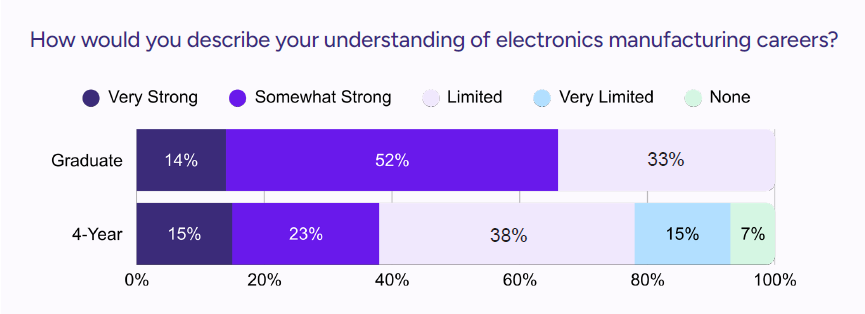
Fewer than half of undergraduate students (46%) have considered a career in electronics manufacturing. This may be because they don’t know what the options are: Only 38% of undergraduates say their understanding of possible careers in electronics is strong or very strong.
Graduate students were much more likely to say they’re considering the field (76% vs. 46%), and they also have a much deeper understanding of careers in electronics.
Students need more opportunities to explore and understand electronics careers
Students credit hands-on experience — not messaging — for sparking their interest in electronics. And when asked what would help them understand the field, they want to see what the job really looks like.
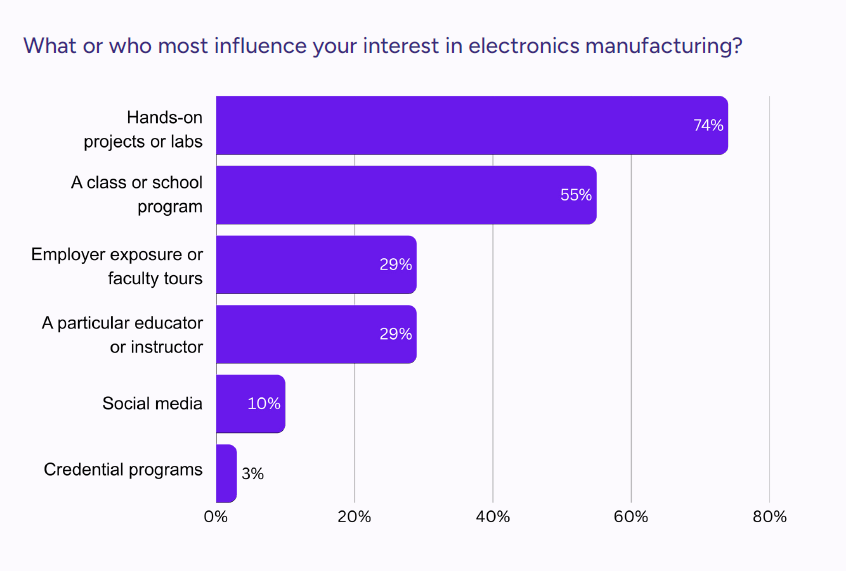
Hands-on projects or labs (74%) and a class or school program (55%) are, by far, the biggest drivers of student interest — well ahead of employer exposure or facility tours (29%) and a particular educator or instructor (29%). While 82% of graduate students said they’ve used research assistant roles to explore electronics careers, undergraduates’ exploration is rooted in project-based learning (77%) and career fairs or campus events (62%).

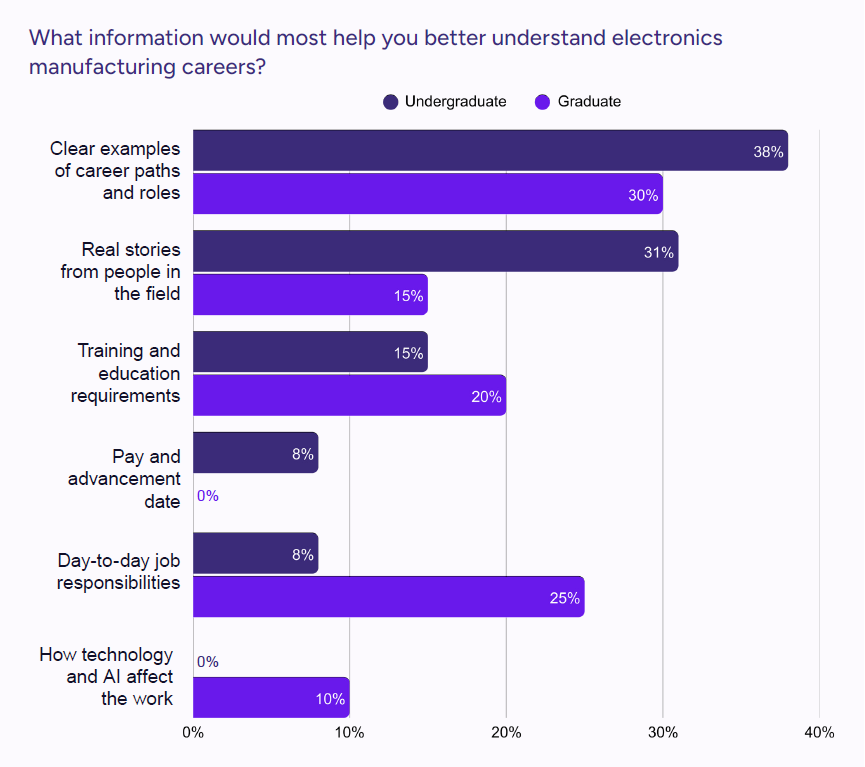
Asked what information would most help them understand
electronics manufacturing careers, students ranked clear examples of career paths and roles first (36%), followed by stories from people in the field (19%), training and education requirements (17%), and day-today job responsibilities (17%). Pay and advancement data came in last, at under 3%.
Students considering a career path are looking for job security,
opportunities to grow and advance, and earning potential. That’s good news for a sector built on exactly those strengths.
When choosing a career, job security (69%), advancement opportunities (64%), and earning potential (56%) beat out hours/flexibility (31%) and geographic location (21%).
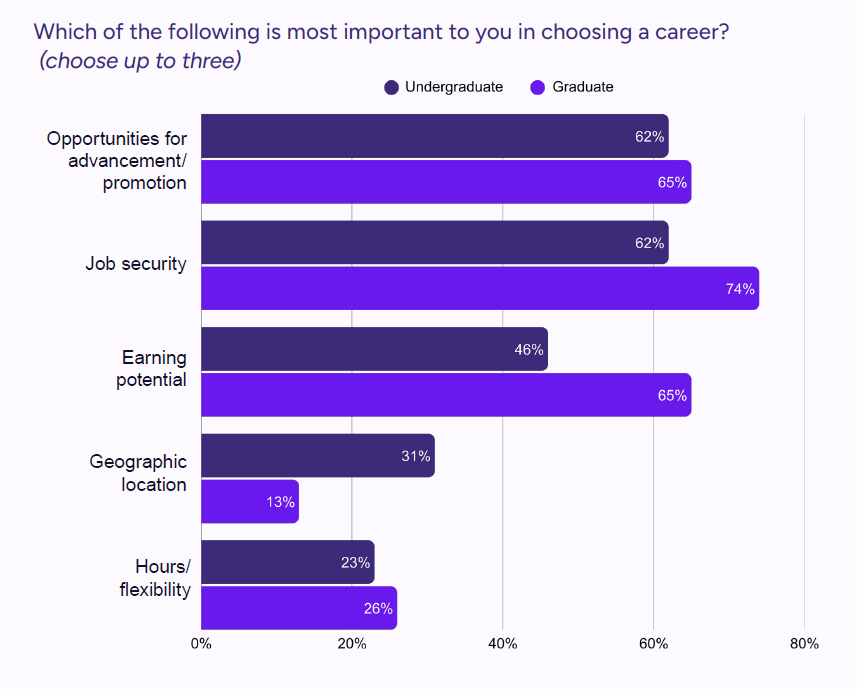
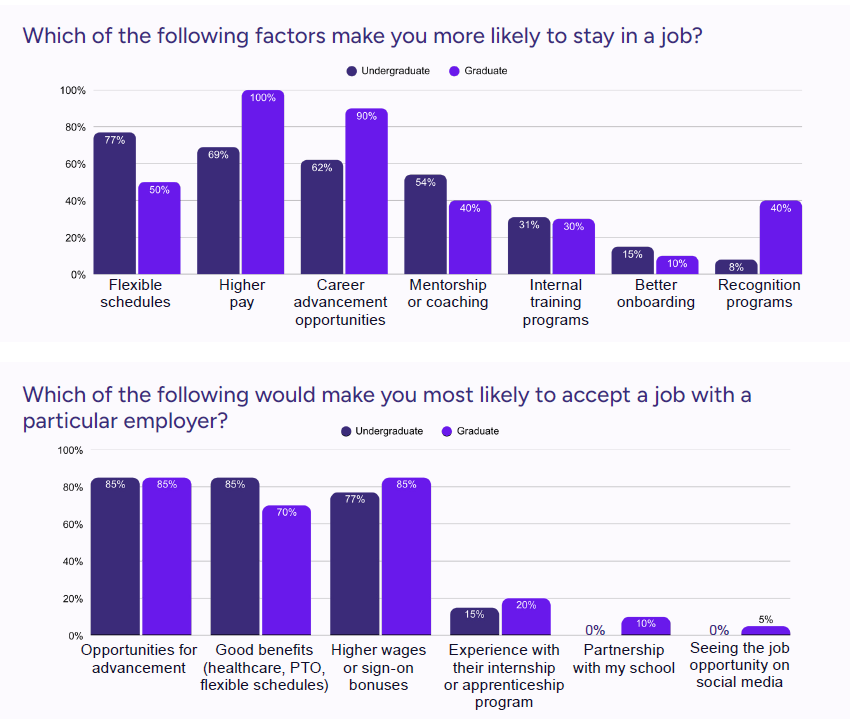
When considering what employer to work for, opportunities for advancement, pay, and benefits were clear priorities. Students expressed more variability in the factors that would lead them to stay in a role, with undergraduates placing more of a premium on flexible schedules and mentorship or coaching.
Methodology
- The Global Electronics Association conducted a survey of students connected to its student chapters through faculty and related outreach from April-May 2026.
- This survey reflects responses from approximately 45 students.
- Respondents included a mix of undergraduate and graduate students (34% undergraduate, 59% graduate, remainder two-year certificate or other).
- Of respondents, 80% were men, 20% were women.
- Of respondents, 90% were full-time students; the remainder attend part-time.