

Circularity for Electronics and Metal Recovery in Practice
Key Summary:
- Electronics circularity must be practical, not theoretical.
- Atlantic Copper’s CirCular project shows large-scale e-waste metal recovery in action.
- Rising global e-waste makes stronger recycling and circularity efforts urgent.
By Dr. Diana Radovan, Director of Sustainability Policy, Global Electronics Association
Circularity policy discussions in electronics risk remaining abstract and unworkable unless they are grounded in actual industry practice.
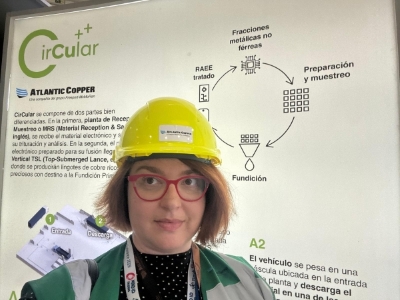
That’s why I couldn’t pass up the opportunity to experience Atlantic Copper‘s work near Sevilla, Spain, firsthand -- from copper production to the end-of-life stage, via its pioneer e-waste recycling CirCular Project.
Copper’s characteristics make it essential to modern life and global decarbonization:
- thermal and electrical conductivity - in electricity and transport
- malleability - in sheaths, decorations, coins, electronics
- ductility - in cables and circuits
- resistance to corrosion - in conduits and roofs
- easy to alloy with other metals - in bronze and brass
- easy to weld together - in pipes and fittings
- energy efficiency - in motors, solar energy, and wind energy.
CirCular is Atlantic Copper’s flagship circular economy project. The CirCular project plant has the ability to annually process about 60,000 tons of nonferrous metal shreds from WEEE, which have already been pre-processed by authorized agents. This project, declared of strategic interest by the European Commission and the Regional Government of Andalusia, will allow the Huelva company to recover materials such as copper, gold, silver, platinum, tin, and palladium, and give them a new life.
The visit was facilitated by the International Tin Association Ltd, as a satellite event of the International Tin Conference 2026 that took place in Sevilla, where I was a speaker and panelist.
The amount of global waste from electrical and electronic equipment (WEEE) has been on the rise in recent years: in 2022, 62 million tons of WEEE were generated, equivalent to filling 1.55 million 40-ton capacity trucks, and it is expected to continue growing at a concerning rate, reaching 82 million tons in 2030, unless something changes in the way we approach electronics reuse, recycling, and recovery. Only a small fraction, about 22.3%, is properly recycled. Promoting the circular economy and responsible consumption, as well as policy shifts, are required on the path toward solutions.