
IPC Hosts Industry Leaders and Signs Strategic MOUs in Taipei
Key Summary
• IPC hosted an Industry Leaders Luncheon in Taipei with nearly 60 government, association, and industry representatives.
• Two strategic MOUs were signed: one with TEEMA and III to advance IPC-CFX adoption and AI knowledge development, and one with TPCA to expand standards, talent, and sustainability cooperation.
• Partnerships focus on smart manufacturing, net-zero initiatives, digital transformation, and strengthening Taiwan’s EMS and PCB sectors.
• Speakers emphasized decades-long collaboration between IPC and Taiwan and the growing need for open, efficient partnerships amid global supply chain shifts.
On May 16, 2025, IPC hosted a high-level Industry Leaders Luncheon in Taipei, bringing together nearly 60 prominent representatives from government agencies, industry associations, and leading enterprises to explore trends and strategic opportunities shaping the future of electronics manufacturing.
During the luncheon, IPC signed two important strategic Memorandums of Understanding, the first with Taiwan Electrical and Electronic Manufacturers' Association (TEEMA) and Institute for Information Industry (III) and the second, with Taiwan Printed Circuit Association (TPCA), taking concrete steps to deepen regional collaboration and promote the transformation of the electronics manufacturing industry.
IPC × TEEMA × III
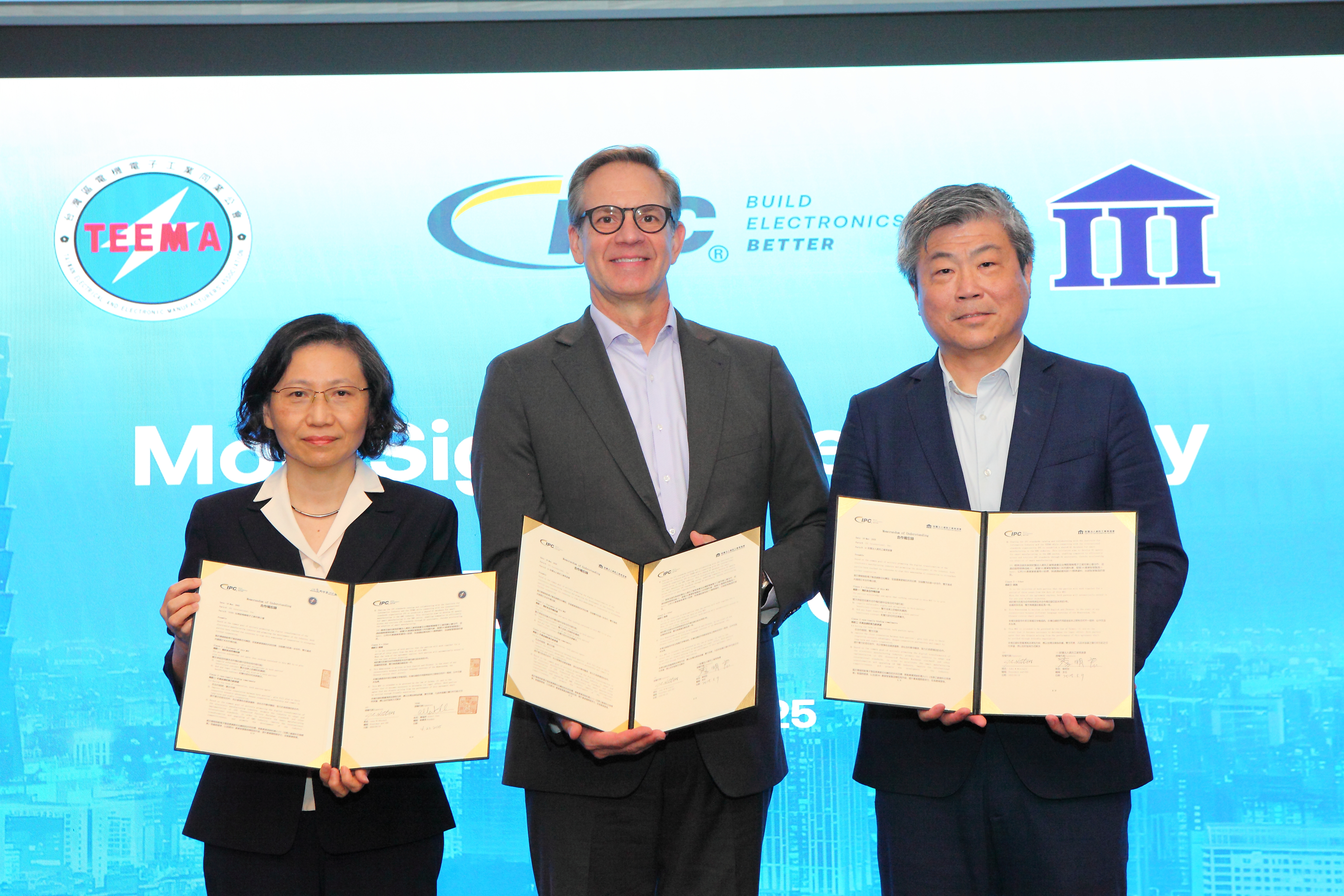
The three organizations will collaborate to promote adoption of IPC-CFX (Connected Factory Exchange) across the EMS (electronics manufacturing services) sector in Taiwan. IPC will also support TEEMA and III in developing an artificial intelligence knowledge base for the EMS industry, empowering electronics manufacturers to accelerate their digital and intelligent transformation.
IPC × TPCA
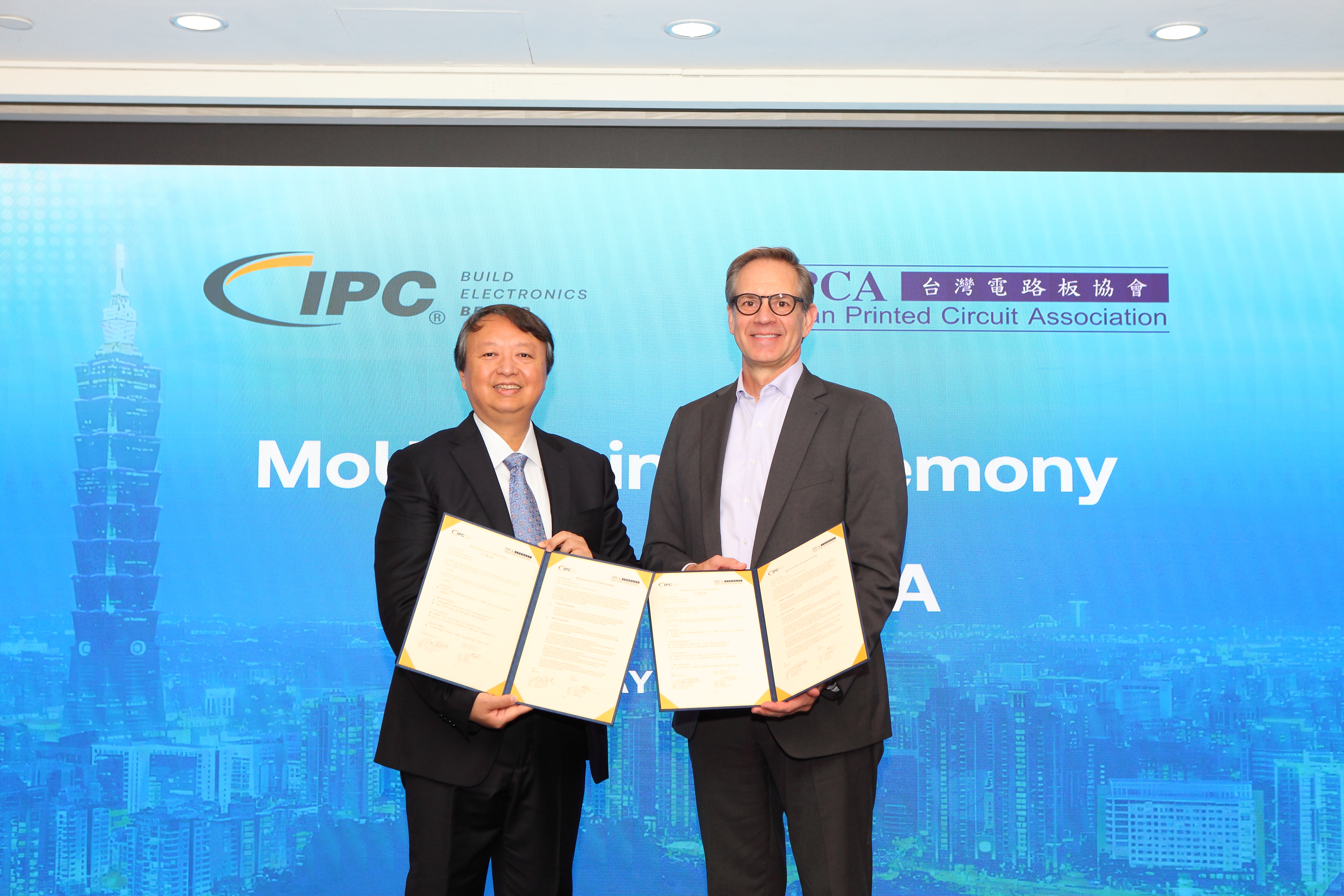
IPC and TPCA will expand cooperation in standards development, talent development, global trade shows, and technical exchanges. In addition, the two organizations will also jointly advance sustainability initiatives, such as achieving net-zero carbon emissions and digital transformation, thereby enhancing the global competitiveness and resilience of Taiwan’s printed circuit board (PCB) industry.
Industry Leaders Luncheon attendees included Tom Edman, TTM Technologies Inc. CEO and IPC Board chair; Dr. John W. Mitchell, IPC president and CEO; Grace Sung, Taiwan Electrical and Electronic Manufacturers’ Association (TEEMA) deputy secretary general; Calvin Tsai, director, Digital Transformation Research Institute, III; Lawrence Chang, TPCA chairman; and David Lai, TPCA secretary general.
Tom Edman stated in his speech to luncheon attendees, “As a key innovation hub in the global electronics industry, Taiwan has been working with IPC for over 50 years. Today, topics such as artificial intelligence, smart manufacturing, and sustainability are reshaping the global supply chain ecosystem, making it more important than ever for the industry to build closer and more efficient partnerships.”
At the signing ceremony, Lawrence Chang emphasized the importance of open collaboration amid global supply chain shifts, technological advancement, and net-zero transition. He stated that the partnership with IPC is a strategic response to these changes, aiming to enhance standardization, talent development, and global supply chain resilience.
“Today’s agreements reflect the long-standing trust and shared vision between IPC and Taiwan’s electronics industry,” said Dr. Mitchell. “As we look ahead, IPC remains committed to fostering forward-looking global partnerships that build a more resilient, innovative, and sustainable electronics manufacturing ecosystem.”
The luncheon gathered industry, government, and association leaders to discuss trends and strategic opportunities shaping electronics manufacturing.
IPC signed one MOU with TEEMA and III, and another with TPCA.
They will promote IPC-CFX adoption and support development of an AI knowledge base for Taiwan’s EMS industry.
The partnership aims to strengthen standards development, talent building, global events, technical exchanges, and sustainability efforts including net-zero initiatives.
They reinforce long-standing cooperation and help enhance competitiveness, resilience, and innovation across Taiwan’s EMS and PCB industries.