
Sustainability Policy Priorities and Advocacy Activities for the Electronics Industry at IPC Day Italy – What’s Next?
By Diana Radovan, IPC Sustainability Policy Director
Key Summary
• IPC emphasized the urgency of defining clear sustainability policy priorities with industry input
• EU-driven rules, especially in automotive and electronics, are expanding beyond environmental topics
• Competitiveness in Europe requires active engagement as the new European Commission forms
• Ecodesign and Digital Product Passports will be major regulatory focus areas
• IPC invited stakeholders to continue dialogue through the October 30 ESPR/DPP webinar
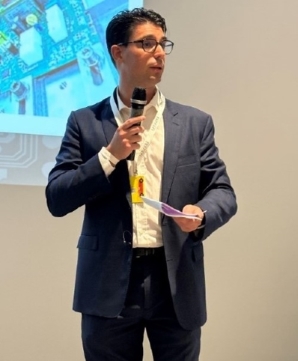
On October 3, I gave a talk on the pressing need to establish, refine, and redefine sustainability policy priorities and advocacy activities in close dialogue with the electronics industry in order for this industry to remain competitive in Europe. This was the key take-away of my presentation at the IPC Day Italy event held at the Convention Center of the Ferrari Museum in Maranello, in partnership with Phoenix Contact and GESTLabs.
The event, conducted mostly in Italian and moderated by Luca Agostoni from GESTLabs, gave automative industry players the opportunity to learn about the latest advances in the design and production of electronic assemblies.
The electronics industry is currently facing the challenge of addressing the requirements of a broad range of largely EU-driven emerging sustainability policies, not all electronics-specific. Sustainability policies are no longer limited to environmental issues alone, including in the Italian automotive industry. IPC remains a trusted partner and a consolidated voice for the industry when it comes to advocating on sustainability policy matters. Determining which of these policies require prioritizing for the electronics industry specifically, on the background of a changing geopolitical landscape, including the formation of a new European Commission, is essential, and this can only be achieved in close and active dialogue with the industry.
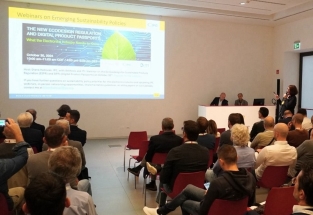
Last but not least, I also invited the audience to our upcoming October 30 webinar on Ecodesign and Digital Product Passports, in which we will dive into the Ecodesign for Sustainable Products Regulation (ESPR) and Digital Product Passports (DPPs) and provide a clear explanation of what they are and how they work.
In addition to enjoying the great content and high quality of the presentations, the IPC team and several participants had an amazing authentic Italian dining experience at a local trattoria. We all enjoyed visiting the Ferrari Museum and learning about the legendary company’s innovative approach and technological progress from its early days until now.
To learn more about IPC’s sustainability policy priorities and ways to get involved in our related advocacy work, contact me at DianaRadovan@ipc.org.
Because electronics and automotive manufacturers face fast-evolving EU sustainability rules, and aligning priorities with industry needs is essential to staying competitive in Europe.
Manufacturers must navigate a wide mix of emerging EU policies, many not electronics-specific, while maintaining efficiency, compliance, and innovation.
IPC engages policymakers, gathers industry insights, and advocates for practical sustainability policies tailored to electronics manufacturing.
They will define how products are designed, documented, and traced in the EU, affecting materials, data requirements, and supply-chain transparency.
They can join IPC’s policy discussions, attend webinars like the October 30 ESPR/DPP session, and collaborate directly with IPC’s sustainability team.