
Evolve Moves the Needle at NY Climate Week
By Kelly Scanlon, lead sustainability strategist, Global Electronics Association
Key Summary
• Evolve, the Global Electronics Association’s sustainability initiative, marked its first Climate Week NYC appearance, highlighting circularity in electronics manufacturing.
• The panel “At Power On: Climate and Circularity in Electronics” brought together leaders from Jabil, Flex, Panasonic, and the Association to discuss challenges, early lessons, and real innovations.
• Discussions emphasized key barriers such as data quality, scalability, tariffs, and geopolitical tensions, and reinforced that progress requires collaboration and cross functional partnership.
• A central message was that real sustainability change must come from designers, builders, and workers closest to the products, not just top leaders.
• Evolve’s participation strengthened conversations, awareness, and momentum toward making electronics more repairable, recyclable, and sustainable.
Evolve, the Global Electronics Association’s Sustainability initiative, made an impact and crossed a milestone with its first-ever event at Climate Week NYC. I joined an incredible program that highlights circularity in electronics manufacturing, demonstrating our sector’s growing commitment to overcoming barriers and fostering a more sustainable future.
The electronics industry is at a critical juncture in terms of sustainability, and circularity is one of the key areas where we can make the most significant impact. I was honored to participate in the panel “At Power On: Climate and Circularity in Electronics,” alongside other sustainability leaders from Jabil, Flex, and Panasonic. Together, we explored how to:
- Tackle the toughest challenges to scaling circularity
- Learn from early adopters
- Showcase real-world innovations making electronics more sustainable
Our discussion acknowledged the numerous barriers to circularity, including the need for high-quality data, scalability, tariffs, and geopolitical tensions, among others. What really stood out was our shared understanding that no single organization can solve these issues on its own. Progress depends on partnership, education, storytelling, and transparency.
For me, this panel helped move the conversation forward in a meaningful way. Sharing information and raising awareness are necessary, and collaboration is critical. We’re moving beyond the “low-hanging fruit” and into the complex problem-solving that sustainability demands. These are not challenges that can be solved in isolation; they require cross-functional teamwork and more open discussions like the one we had in New York.
One of my strongest convictions is that the people who design, build, and work directly on products will be the ones to drive true change. Sustainability solutions won’t come just from the top; they’ll come from those in the trenches who know the products inside and out.
We face a choice as demand for electronics grows: reduce quantity or improve quality. I believe in the latter. We must focus on recycling, repurposing, repairing, and making better products. Our goal should be to create electronics that contribute positively to solving global challenges, rather than adding to them.
Attending Climate Week reinforced for me just how important communication is. When dealing with complex products, intricate supply chains, and diverse global players, conversations can become tangled. Many people are already doing the right things, yet they often fail to communicate those efforts effectively. Measurement is difficult, and data can be unclear.
That’s why our participation in Climate Week was so valuable. It provided Evolve with the platform to initiate more in-depth discussions and connect with others working toward the same goals. We left energized, informed, and ready to continue working together to make electronics more sustainable.
For a deeper dive into the Evolve program, visit: Evolve | electronics.org
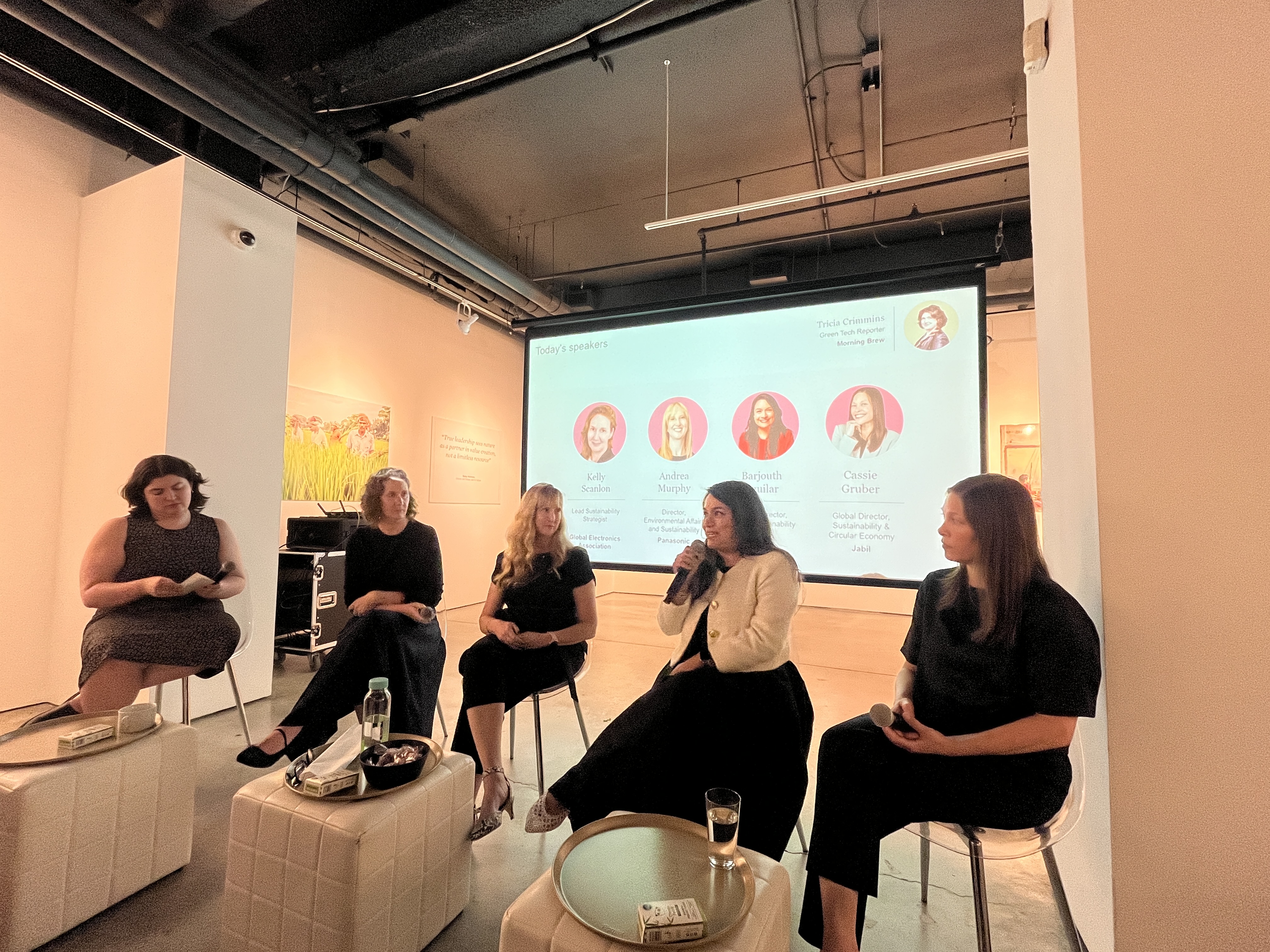
Evolve joined Climate Week to elevate conversations about circularity in electronics manufacturing and showcase the industry’s growing commitment to sustainability.
The panel explored scaling circularity, learning from early adopters, and highlighting real world innovations that support more sustainable electronics.
Participants pointed to challenges including data quality, scalability, tariffs, and geopolitical pressures, all of which complicate progress.
Panelists agreed that no single organization can address circularity challenges alone. Effective progress depends on shared knowledge, partnership, and transparency.
Evolve emphasized that meaningful sustainability improvements come from designers, builders, and workers who understand products deeply and can influence how they are made, repaired, and reused.