EVOLVE - STANDARDS
Industry standards that support sustainable electronics
Sustainability requirements are reshaping electronics manufacturing – from how materials are sourced and declared, to how products are designed for longer life. The Global Electronics Association develops industry standards that help companies improve consistency, transparency, quality, and compliance while supporting sustainability-related requirements.
Every standard listed here has applicability to various sustainability requirements and is developed by industry volunteers and maintained through an open, consensus-based process. Any interested person can join a committee or submit a comment – that means these standards reflect what the industry actually needs – not what a single organization has decided.
By establishing a common language for the industry, standards ensure that every player in the supply chain can move from broad goals to practical implementation across sustainability, compliance, reporting, and supply chain management. They provide the consistency needed to navigate increasingly complex regulations—whether that means documenting material transparency or designing for circularity. With these standards, electronics companies are better equipped to measure, verify, and report the data increasingly requested by global auditors, regulators, customers, and supply chain partners.
Materials and supply chain transparency
The IPC-175x family of standards establishes a shared data architecture for exchanging material, substance, and sourcing information across the electronics supply chain. Built on standardized JSON/XML schemas, these standards connect suppliers, manufacturers, and customers through a common reporting format – with over 3 million B2B declarations made using IPC-1752 alone.
IPC-1751 – Generic Requirements for
Declaration Process Management
The foundational schema that enables product, material, and supply chain data to be exchanged in a consistent, machine-readable format. Supports end-to-end traceability, auditability, and reliable reuse of sustainability data for regulatory compliance and lifecycle assessments.
IPC-1752 – Materials Declaration Management Standard
The industry standard for communicating substance and material data across the supply chain, supporting compliance with regulations such as RoHS and REACH. Enables companies to identify restricted substances and make informed design and procurement decisions.
IPC-1753 – Laboratory Declaration Standard
Enables laboratories to share analytical test results in a standardized, machine-readable format – improving the speed and accuracy of material compliance verification and reducing redundant testing across the supply chain.
IPC-1754 – Materials Declaration Standard
for Aerospace and Defense and Other Industries
Extends the materials declaration framework to sectors with complex regulatory and operational requirements, enabling hazardous substance tracking across a product's full life cycle.
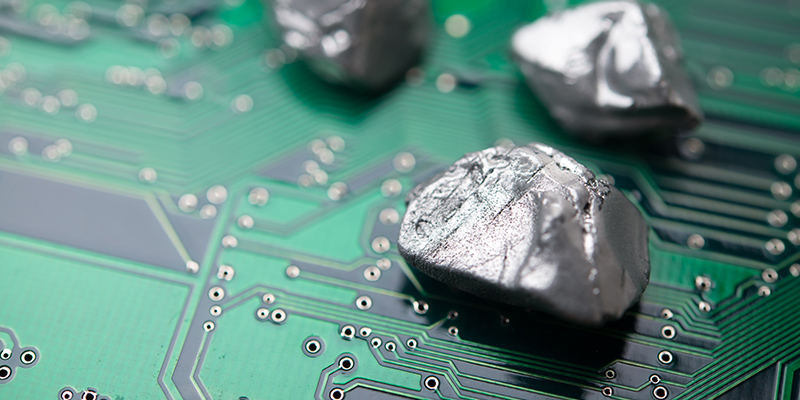
IPC-1755 – Responsible Sourcing of Minerals Data Exchange Standard
Standardizes how companies share data on the responsible sourcing of minerals, including conflict minerals and those linked to environmental or human rights concerns. Supports due diligence and alignment with global ethical sourcing expectations.
IPC-1756 – Manufacturing Process Data Management
Enables standardized exchange of manufacturing process data, helping companies identify process-sensitive materials and optimize production methods for greater efficiency and reduced waste.
IPC-1758 – Declaration Requirements for
Shipping, Pack, and Packing Materials
Standardizes packing material data exchange, enabling companies to assess packaging choices for compliance, recyclability, and environmental impact.
IPC-1782 – Standard for Manufacturing and
Supply Chain Traceability of Electronic Products (Under revision)
Provides a framework for tracking materials, components, and processes based on risk and product criticality. Supports responsible sourcing, efficient recalls, lifecycle assessments, and regulatory compliance
Circularity and product life extension
These long-standing industry standards support product reliability, repairability, and service life, while also helping companies advance circular economy goals.
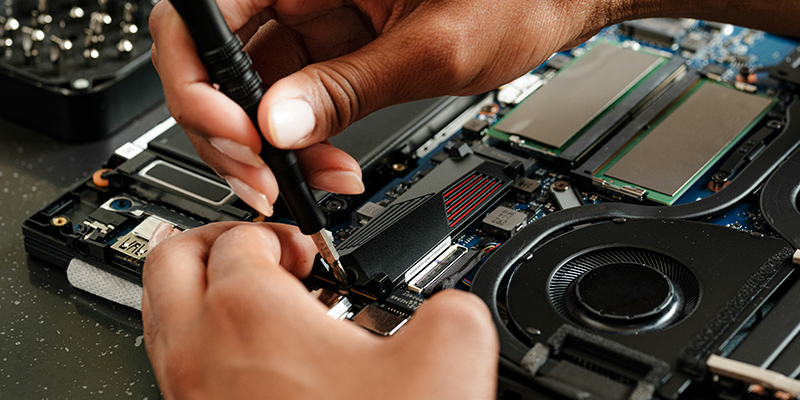
IPC-7711/21D – Rework, Modification and Repair of Electronic Assemblies
The industry reference for rework, repair, and modification procedures. Used for decades across manufacturing and field service, it enables consistent, damage-free repairs that extend product life and reduce electronic waste. Training and certification programs are available alongside this standard.
Responsible manufacturing
These standards help electronics companies manage operational performance, governance, chemical management, product data, and risk, while supporting environmental and social responsibility goals.
IPC-1401B – Environmental, Social and Governance (ESG) Management System
Standard defines requirements and best practices for an effective ESG management system, enabling enterprises to integrate ESG into products and value chains, manage risks and opportunities with partners, and strengthen competitive advantage.
IPC-1402 – Standard for Greener Cleaners Used in Electronic Manufacturing
Provides guidance on selecting safer, lower-impact cleaning products to reduce worker exposure to hazardous substances and minimize environmental harm.
IPC/DAC-2552 – General Electronic Components Model Based Definition (MBD) Standard (Under revision)
Standardizes component specifications for board-level manufacturing and reliability, contributing to improved product durability, reduced failure rates, and less electronic waste.
IPC-2581 – General Requirements for Printed Board Assembly Products Manufacturing Description Data and Transfer Methodology (Under revision)
Enables efficient digital transfer of design and manufacturing data, reducing paper documentation, errors, rework, and scrap. Supports closed-loop feedback between design and production.

What else is in development
The industry is actively developing new standards to address emerging sustainability requirements, while also advancing standards that support sustainability objectives. These represent where the electronics industry is heading – and where your input can shape the outcome.
IPC-1783-CO2e – International Standard for Data Collection
and Reporting of CO2 Equivalent (CO2e) for the Electronics Manufacturing Supply Chain
A sectional standard under IPC-1783 that will establish what needs to be measured, estimated, collected, and reported for CO2e emissions calculations across the electronics manufacturing supply chain. On release, this will be a key focus of the Evolve program.
IPC-2592 – Digital Credential Exchange (DCX)
Establishes the framework for secure, credentialized data exchange within the electronics supply chain – controlling access to content based on verified credentials. Supports validated reporting and verification for sustainability and traceability purposes.

IPC-7731 – Rework, Modification and Repair of
Cable and Wire Harness Assemblies
Extends the repair and rework methodology of IPC-7711/21D to cable and wire harness assemblies, providing industry-developed procedures specific to these products.
IPC-7712 – Component Reclaim Standard
Establishes requirements and guidance for the safe removal, conditioning, inspection, and testing of components for reuse – covering everything from visual inspection and electrical testing to counterfeit and cybersecurity considerations.
Get involved
Every standard on this page is shaped by industry volunteers. Committees are open, participation is free, and every company – member or not – has an equal vote. Help move the industry from intention to measurable action across sustainability, compliance, transparency, and responsible electronics manufacturing.
Join a committee and contribute to development.
Submit a comment on an existing standard.
Get in touch with the sustainability team.